All non-contact timber stress-grading systems are required to demonstrate that they meet or exceed the initial qualification requirements given in AS/NZS1748 Part 2 Clause 6. There is a note at the end of Clause 6.1 which details when this initial qualification can be shared by a number of Mills.
NOTE: Where a number of mills use the same grading method to produce the same stress grades and have the same wood resource, it is possible to pool the data and share the qualification. A pooled qualification only applies to mills that can demonstrate that they meet the parameters used in the original qualification. For each mill, the qualification is subject to the conditions of Clause 6.
(Extract from AS/NZS1748.2 Clause 6.1)
This article interprets the Australian Standard’s testing requirements, and lists the amount of testing required to progress through this qualification process. The qualification process is set out in two phases. Phase 1, Determination of characteristic design properties and strength indicator properties, and Phase 2, Determination of co-efficient of Determination, R2.
Phase 1: Determination of characteristic design properties and strength indicator properties.
This phase of the initial qualification testing demonstrates the ability of the grading system to produce structurally graded timber that meets or exceeds the characteristic design properties for the nominated grade/s.
i/ Select the most commonly produced section size with a face width of 140mm or less. A sample of each grade, for which qualification is required, shall be drawn as follows:
a/ Each grade available in the size with the greatest annual production shall be sampled.
b/ Any grade, for which qualification is required and is not available in the size selected in Item a/ but can be produced in another size, shall be sampled.
Therefore for that size selected, test buycbdproducts least 50 boards for each of the following properties;
1/ Bending Strength/Bending Stiffness,
2/ Single Span Beam Shear Strength,
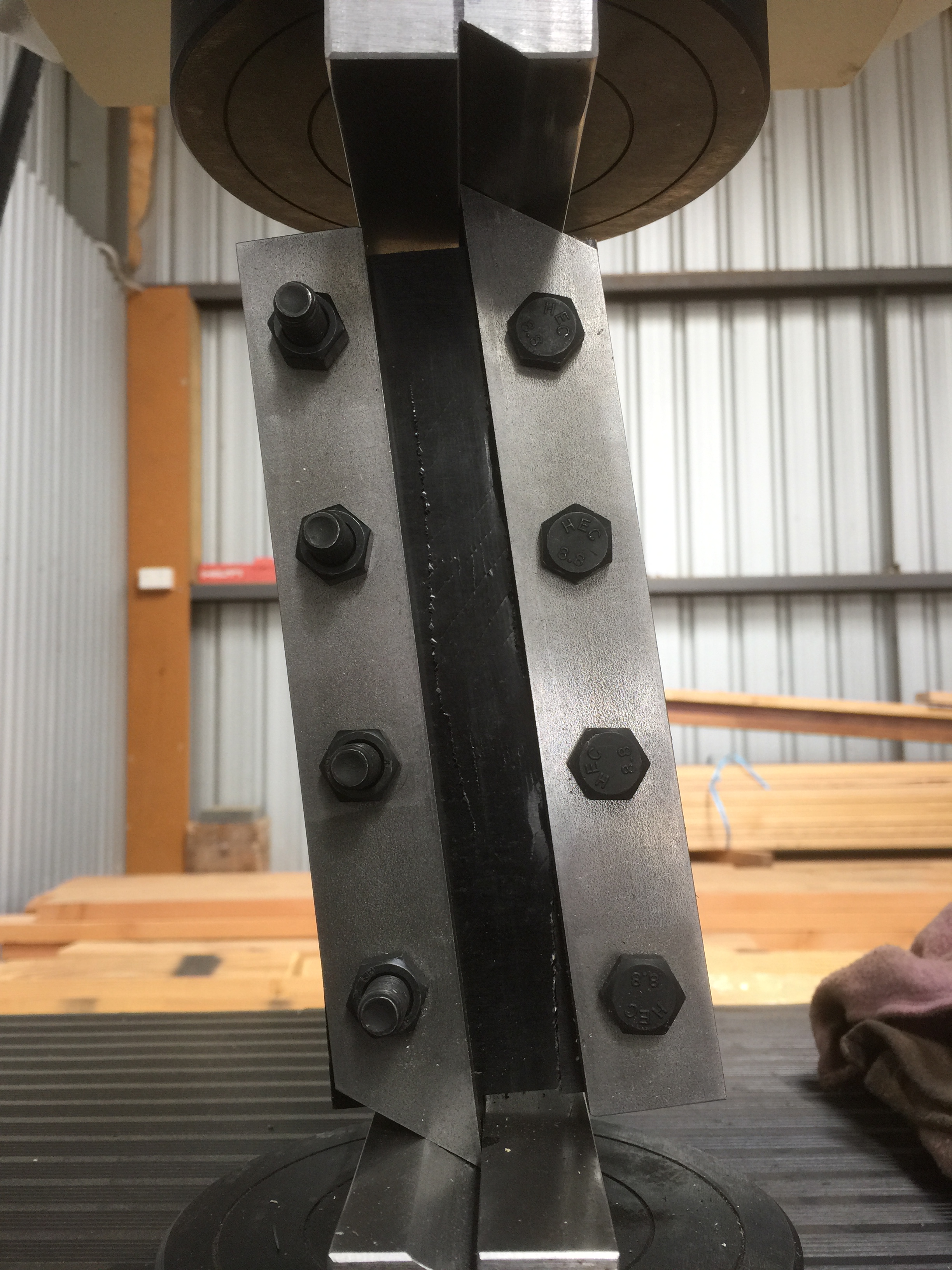
3/ Tension parallel to Grain Strength
4/ Compression parallel to Grain Strength.
Therefore a minimum sample of 150 boards is required for every grade produced in that selected size range.
ii/ Where structural timber product/s with a face width greater than 140 mm is produced, a sample of each grade, for which qualification is required, shall be drawn as follows:
a/ Each grade available in the size with the greatest annual production shall be sampled.
b/ Any grade, for which qualification is required and is not available in the size selected in Item (a) but can be produced in another size, shall be sampled.
Therefore for those sizes selected, test at least 50 boards for each of the following properties, as given in i/ above.
Therefore a minimum sample of 150 boards is required for every grade produced in that selected size range.
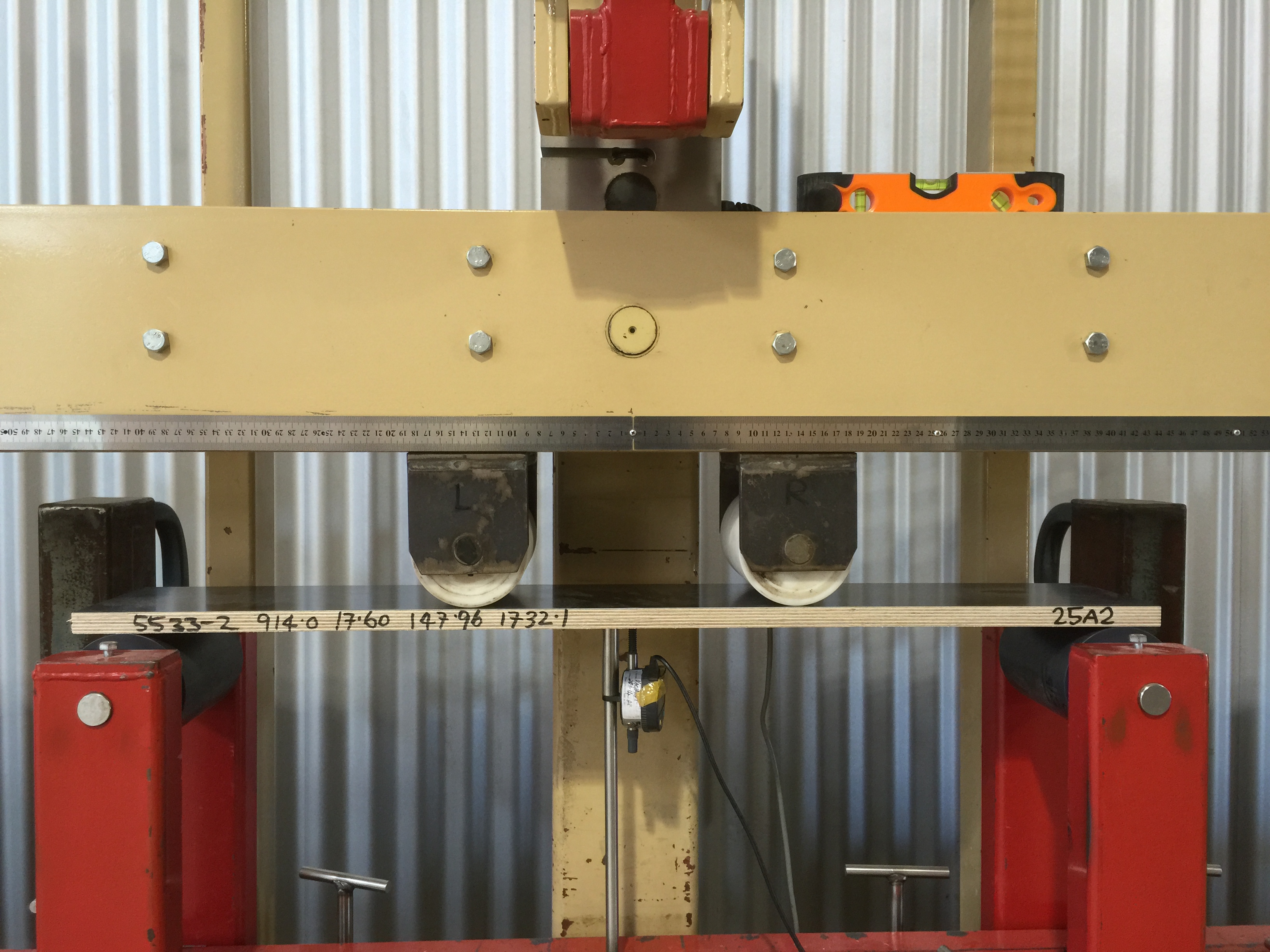
Due to the convenience of obtaining both a bending strength value and a bending stiffness value from a single 4-point bending test, it is advised that a higher sample of 100 boards be taken to obtain greater confidence in the bending test results. Following this recommendation will require a sample of 200 boards per size/grade to be supplied.
Phase 2: Determination of co-efficient of Determination, R2
This phase of the initial qualification testing defines the relationship between the grading parameters and the indicator properties. The correlations between the grading parameters and the design properties are later used to adjust the grading system to optimally produce structural timber products that meet or exceed the characteristic design properties for the structural grade.
The same sizes identified for sampling in Phase I (either 1 or 2 sizes) shall be sampled in the Phase II testing. Each sample shall be a representative run of mill, ROM, sample (sampled ROM boards should only be excluded if they do not meet the utility requirements of structurally graded timber).
At least 200 ROM boards are to be selected at random from a normal production run for each size selected. Each sampled board shall have all possible grade parameters stored in computer files, isolated or in combination, and recorded in such detail that the grading parameters associated with any possible tested length can be retrieved and used in the analysis.
It is recommended that 300 boards per size sampled be supplied, because the grade-defining defect may be located close to the end of the board, and therefore not allowing the grade-determining point to be located at the centre of a 4-point bending test specimen. All boards from which the low-grade point can be positioned correctly will be tested and used in the analysis to define the co-efficient of determination for the grading parameter/s.
I hope this article has made clear the testing requirements for Non-Contact Grading Systems seeking to demonstrate compliance to the Initial Qualification requirements in AS/NZS1748 Part 2 Clause 6.
Please contact_me to provide a quotation and an estimation of time required to complete, in part, or in total, the AS/NZS1748 Part 2 Initial Qualification testing program. The Initial Qualification testing Program is an expensive exercise, and care should be taken to ensure that the sampling of test boards is done correctly. Breitinger Consulting can assist in the development of sampling procedures compliant to the requirements of AS/NZS1748 Part 2.
 Plywood Manufacturers or Plywood Exporters to Australia looking to have their products structurally assessed to Australian Standards should call Breitinger Consulting.